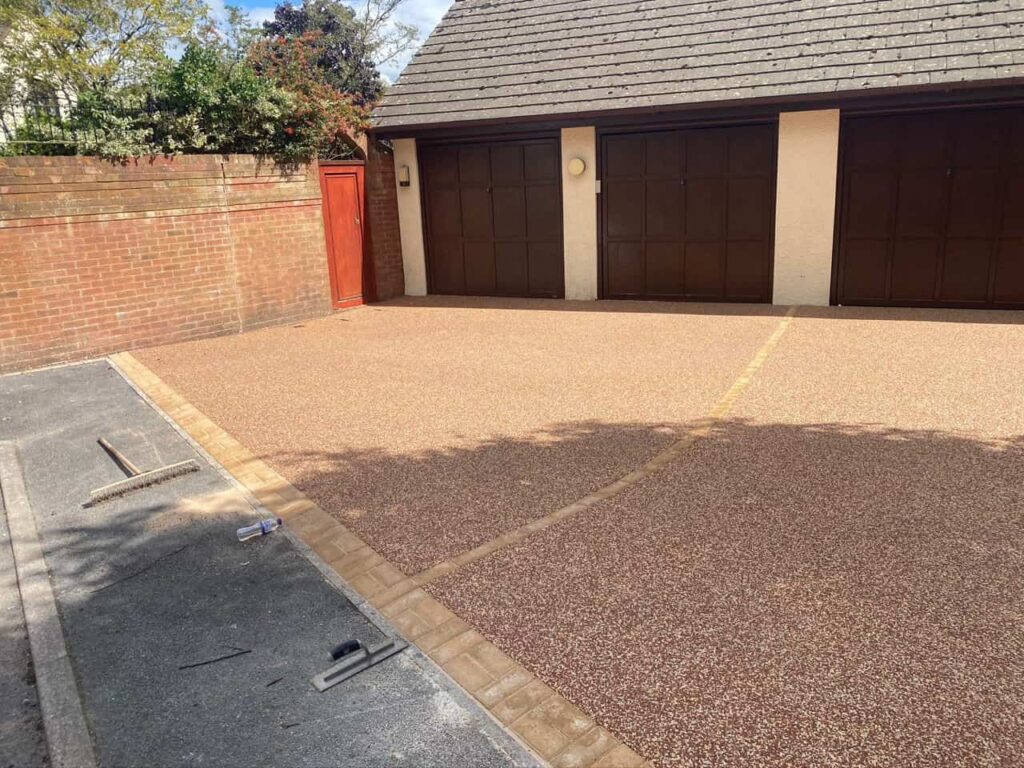
What Makes Block Paving a Flexible Choice for Future Property Changes?
A driveway is often installed with current requirements in mind, but the way a property is used can change considerably over time. A household may need additional parking, a different entrance arrangement, new paths or alterations around the front of the property. Choosing a driveway surface that can adapt to some of these changes can therefore be a practical consideration from the outset.
For property owners in Maidstone, Kent, block paving offers useful flexibility because the surface is constructed from individual paving units rather than forming one continuous layer. Sections can potentially be lifted, adjusted and reinstated when suitable, allowing certain alterations to be incorporated without automatically reconstructing the entire driveway. However, the quality of the original design and installation remains fundamental to how successfully the surface can accommodate future changes.
Why Is Block Paving Well Suited to Properties That May Change Over Time?
The flexibility of block paving comes largely from its modular construction. Individual blocks work together to create a complete paved surface, but they can also be removed from particular areas when access or alterations are required.
This characteristic can be valuable where future changes are anticipated. Driveways can sometimes be extended, paths incorporated, sections reshaped or individual damaged blocks replaced while retaining substantial areas of the original installation.
Individual Blocks Create a Modular Surface
Unlike a continuous driveway surface, block paving is made from numerous individual units installed over a carefully prepared supporting construction.
Once laid correctly, these blocks create a stable interconnected surface capable of accommodating regular vehicle and pedestrian use.
The individual nature of the paving also provides flexibility.
Where a section needs to be altered, it may be possible to lift the relevant blocks while leaving unaffected parts of the driveway in place. This can make certain future modifications considerably more straightforward.
A Driveway Can Potentially Be Extended
Parking requirements often change.
A property that originally required space for one vehicle may later need to accommodate additional vehicles. In other circumstances, homeowners may simply decide that a larger hard-surfaced area would make everyday access and manoeuvring easier.
Block paving can lend itself to extensions where the surrounding site is suitable.
The existing layout can be assessed alongside the proposed additional area so that the extended driveway functions as one coherent surface.
Planning for Expansion During the Original Installation Helps
Although block paving can be adaptable, future alterations are usually easier when they have been considered during the initial design.
If a homeowner believes additional parking may eventually be required, the original driveway can be positioned with this possibility in mind. Edging, levels and the relationship with surrounding areas can all influence how easily the surface can later be expanded.
This does not mean constructing more driveway than currently required.
It simply means avoiding a layout that unnecessarily makes sensible future changes difficult.
Additional Parking Can Change How a Driveway Needs to Function
Creating more parking space involves more than adding another rectangle of paving.
Vehicles need to enter, leave and manoeuvre effectively. An extension that technically accommodates another vehicle may still be inconvenient if the overall driveway layout has not been considered.
When altering block paving, the complete parking arrangement should therefore be reviewed.
The objective is to make the additional area useful rather than simply increasing the quantity of paved surface.
Block Paving Can Be Adapted Around New Paths
The way people move between the driveway, entrance and garden can change as a property develops.
A new pedestrian route may become desirable, particularly if the existing arrangement requires people to walk through vehicle areas unnecessarily.
Block paving can allow paths and driveway sections to be considered together.
Where appropriate, a new route can be incorporated while maintaining a consistent relationship with the existing paving.
Existing Paths Can Sometimes Be Reconfigured
A path that suited the original property layout may become less practical following other changes.
An entrance may be used differently, landscaping may be altered or the relationship between parking and pedestrian areas may change.
Because block paving is made from individual units, sections can potentially be reconfigured to support a revised layout.
The underlying construction still needs to suit the intended use, particularly where an area changes from pedestrian use to regular vehicle loading.
Landscaping Changes Can Be Easier to Integrate
Front gardens and surrounding outdoor spaces often evolve.
Planting areas may be reshaped, borders can change and the balance between hard landscaping and softer areas may be reconsidered.
Block paving can provide useful flexibility around these alterations.
Rather than viewing the driveway as an isolated rectangle, the paving layout can respond to surrounding features. Curves, borders and changes in direction can be incorporated where appropriate to create a more integrated overall design.
Borders Can Help Define Future Changes
Contrasting or clearly defined paving borders can do more than improve appearance.
They can help establish the shape of parking areas, pathways and other sections within the overall surface. Where future alterations are anticipated, well-planned boundaries can make the layout easier to understand and adapt.
Borders can also provide visual continuity if an adjoining section is modified later.
Their design should still support the structural requirements of the paving rather than being treated purely as decoration.
Individual Blocks Can Be Lifted for Localised Work
One of the most practical characteristics of block paving is that a specific section can potentially be lifted without removing the complete surface.
This may be useful where access beneath part of the driveway is required or where localised work needs to be completed.
Once the underlying work is finished, suitable paving can often be reinstated.
Correct reinstatement is important because the bedding, levels and jointing need to be restored properly rather than simply placing the blocks back into position.
Reinstatement Can Preserve More of the Existing Driveway
When only a relatively small area needs to be disturbed, retaining the surrounding paving can be beneficial.
The affected blocks can be lifted carefully, the necessary underlying work completed and the area reconstructed.
This modular approach can avoid unnecessary disturbance to serviceable sections.
However, the success of reinstatement depends on the condition of both the paving and supporting construction. Existing settlement or other defects should be addressed rather than simply recreated during the work.
Damaged Blocks Can Often Be Addressed Individually
A localised defect does not always require extensive resurfacing.
If an individual block becomes damaged while the surrounding paving and foundation remain sound, the affected unit may be replaceable.
This is one of the practical advantages of a modular paving system.
Professional assessment can establish whether the problem is genuinely limited to the block or whether movement beneath it has contributed to the damage.
Local Settlement Should Be Investigated Before Re-Laying Blocks
If a small section of block paving begins sinking, simply lifting the blocks and adding material beneath them may not address the complete problem.
The reason for the movement should first be considered.
Weakness within the supporting construction, localised disturbance or another underlying issue may have caused the level to change. Reinstating the surface without addressing that cause could allow the same depression to develop again.
Professional repair should therefore consider the construction beneath the blocks as well as the visible paving.
The Driveway Shape Can Potentially Be Altered
Future property changes may require more than simply making a driveway larger.
The entrance may need to function differently, turning space might need improvement or part of the existing paved area may be better used for another purpose.
Block paving can provide flexibility when reshaping these areas.
Sections can potentially be reconstructed to create a revised edge or layout while retaining suitable paving elsewhere.
Block Paving Works Well With Defined Zones
Larger driveway areas do not necessarily need to function as one visually uniform space.
Different block arrangements or borders can help distinguish parking areas, pedestrian routes and entrances while keeping the overall surface coordinated.
This can be useful if property requirements later change.
A clearly structured driveway may be easier to adapt because its different functional areas have already been considered as part of the design.
Future Changes Should Still Respect Surface Levels
Flexibility does not mean that new paving can simply be added wherever space is available.
Surface levels are fundamental to the performance of the completed driveway. New and existing sections need to meet appropriately, without creating unnecessary steps, depressions or awkward transitions.
This becomes particularly important when extending an established driveway.
The proposed alteration should be assessed in relation to the existing levels before construction begins.
Drainage Needs to Be Reconsidered When the Layout Changes
Water movement across a driveway is influenced by its shape and levels.
If the paved area is extended or reconfigured, the way rainfall travels across the surface may also change. A previously suitable arrangement should not automatically be assumed to remain appropriate after alteration.
Drainage therefore needs to form part of the revised design.
This helps prevent a new extension from creating low points or directing water towards areas where it is not intended to collect.
The Supporting Base Is Just as Important as the Blocks
The visible paving is only the upper part of a block paved driveway.
Its long-term performance depends heavily on the construction beneath. Preparation needs to provide suitable support for the intended use, particularly where vehicles will regularly pass or park.
This becomes especially relevant when extending a driveway.
A newly constructed section needs appropriate groundwork rather than relying on the existing paving to compensate for insufficient preparation.
New and Existing Sections Need to Work Together
When extending block paving, the connection between old and new areas deserves careful attention.
The new section should be constructed to appropriate levels and integrate properly with the existing surface. Poor transitions can create uneven areas or make the extension appear disconnected from the original driveway.
A professional approach considers both structural and visual continuity.
The aim is for the altered driveway to function as one complete area rather than as unrelated sections added at different times.
Matching Existing Paving Requires Consideration
Where an established block paved driveway is extended, the appearance of the original blocks may have changed through normal exposure and use.
New paving can therefore initially look different even when a similar product is selected.
This does not prevent an extension from being practical, but it is worth considering during planning.
Where exact matching is difficult, borders or deliberately defined sections can sometimes help create an intentional transition rather than trying to disguise every difference.
Block Paving Can Adapt to Changes Around Entrances
The relationship between a driveway and the property entrance is important for everyday use.
Changes to paths, steps or surrounding landscaping can alter how people approach the building. Block paving can potentially be adjusted to complement a revised entrance arrangement.
Planning should consider both pedestrians and vehicles.
A surface that works effectively for parking but creates an awkward walking route is not making the best use of the available area.
Alterations Do Not Always Require a Complete New Driveway
One of the misconceptions surrounding driveway changes is that any significant alteration automatically means starting again.
With block paving, this is not necessarily the case.
Where the existing surface and supporting construction remain in suitable condition, sound sections can potentially be retained while specific areas are modified.
This condition-led approach can preserve more of the existing installation while allowing the driveway to evolve with the property.
Existing Condition Determines How Flexible the Surface Really Is
Although block paving has inherent adaptability, the condition of an older driveway still matters.
If the surface has widespread settlement, unstable edges or extensive problems beneath the paving, retaining large areas simply because the blocks can be lifted may not be appropriate.
The existing construction should be assessed before planning an extension or significant alteration.
Flexibility is most valuable when the sections being retained remain structurally suitable.
A Good Original Layout Creates More Future Options
Thoughtful driveway design can make later alterations much easier.
A layout that accounts for access, parking, pedestrian movement, drainage and surrounding landscaping is less likely to create unnecessary restrictions if the property changes.
This is one reason professional planning matters even when the initial driveway appears relatively straightforward.
The aim is not to predict every future change but to create a practical layout that does not unnecessarily limit reasonable options.
When Can Block Paving Be Particularly Useful for Future Changes?
Its adaptable construction can be particularly useful where:
- additional parking may be required later;
- the driveway could eventually be extended;
- pedestrian routes may change;
- surrounding landscaping is likely to evolve;
- sections may need to be lifted for localised work;
- individual damaged blocks may require replacement;
- parking and walking areas need clearer definition;
- the driveway layout may need reshaping as the property develops.
The suitability of any alteration should still be determined by the existing ground conditions, levels and intended use.
Why Professional Block Paving Installation Matters
The future flexibility of a block paved driveway depends heavily on how well it is constructed initially.
A carefully prepared base, appropriate surface levels, stable edges and a considered layout provide the foundation for both immediate performance and future adaptability.
Poor groundwork cannot be compensated for simply because individual blocks can be lifted.
Professional installation ensures that flexibility is combined with the structural preparation required for regular driveway use.
Block Paving Driveways in Maidstone, Kent
At Maidstone Driveways & Surfacing, we understand that a driveway needs to work for the property as it is used today while also allowing sensible consideration of how requirements may change.
Block paving can provide valuable flexibility where parking areas need extending, sections require adjustment or the surrounding property layout evolves. The key is to combine this adaptability with proper groundwork, suitable drainage and thoughtful design.
For property owners in Maidstone, Kent, professional block paving installation can create a practical driveway that works with the wider property rather than unnecessarily restricting future changes.
Conclusion
Block paving is a flexible driveway choice because its individual units allow specific sections to be lifted, altered, repaired or extended without automatically requiring the entire surface to be reconstructed. This can be particularly useful when parking requirements change, paths are redesigned, landscaping evolves or localised access beneath the paving becomes necessary.
That flexibility still depends on good construction. Extensions need suitable foundations, revised layouts must account for drainage and surface levels, and existing paving should be assessed before deciding which sections can reasonably be retained.
Planning these factors from the beginning can create a driveway that meets current needs while remaining adaptable to future changes.
If you are considering a new or altered block paved driveway at your property in Maidstone, Kent, contact Maidstone Driveways & Surfacing. We can assess the available area and recommend an appropriate layout and construction approach based on how you need the driveway to function.
Call us on: 01622 938 289
Click here to find out more about Maidstone Driveways & Surfacing
Click here to complete our contact form and see how we can help with your driveway needs.